
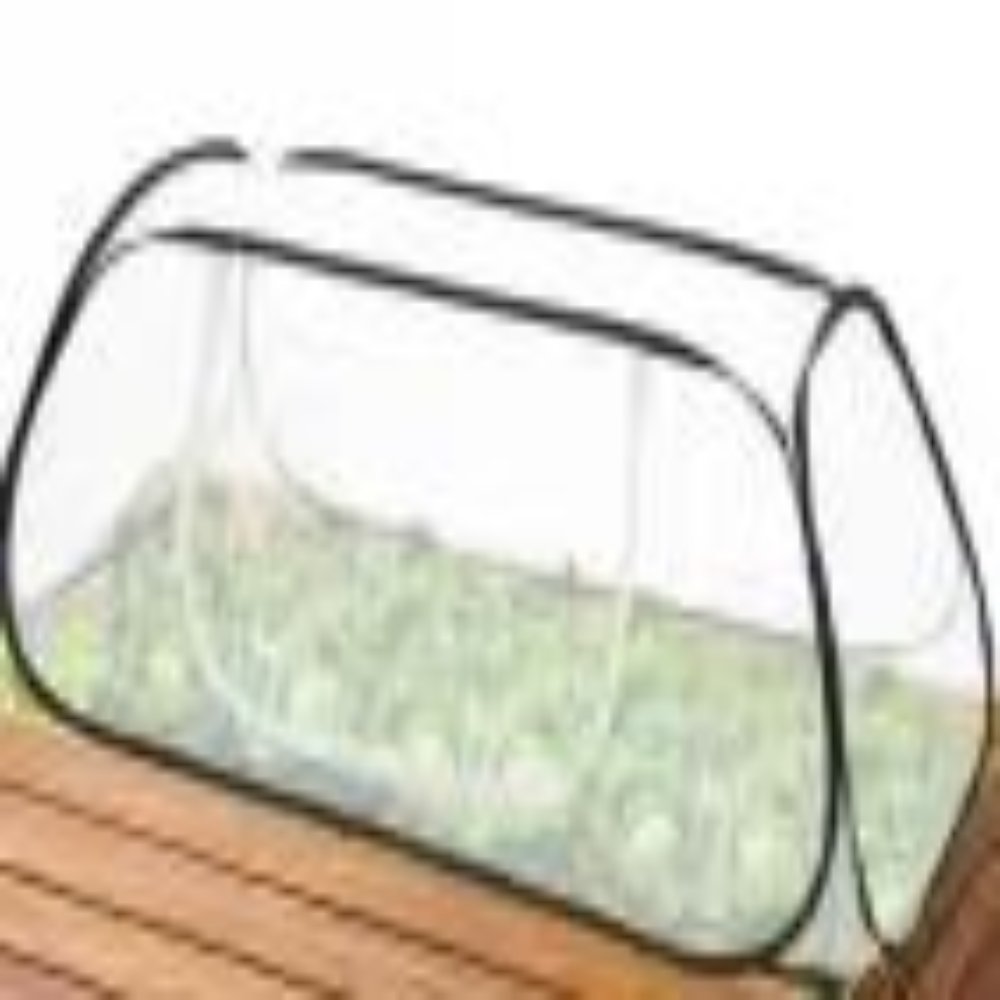
For a plant tent enquiry, show where access is needed and ask the supplier to identify the opening on the offered sample. Record the opening’s position, closure reference and the sample state used for inspection. Keep those construction questions separate from claims about pests, frost, rain or temperature, which cannot be established by a catalogue name or photograph.
Mark the side you intend to use
Kangna lists a plant protection tent in its grow tent category, with an image of a framed enclosure. The product page supplies a catalogue reference for discussing the item. Its protection and environmental wording is not an independently verified result for your intended use. Begin with a marked copy of the product image or a simple drawing that identifies the side from which access is required.
Give the marked side a consistent label in the enquiry. A note such as front opening can be misunderstood if the supplier views the product from another direction. An arrow and a reference point make the request clearer without requiring either side to assume a particular construction. Ask the supplier to return an annotated image of the actual proposed item, using the same orientation.
Describe the access task before asking for a size
Explain the task that the opening needs to support, such as placing a tray, inspecting the contents or reaching a particular part of the intended layout. These are buyer requirements, not promises about what the catalogue item can accommodate. Where an object has to pass through the opening, provide its own reference drawing and ask the supplier to confirm the available access on a physical sample.
Record how the sample is presented when access is checked. An opening viewed with the enclosure relaxed may not correspond to the opening shown in a fully arranged display. Ask the supplier to state the sample condition and avoid estimating a clear access dimension from the photograph. If a specific dimension or tolerance matters, it needs a named measurement and written confirmation.
Opening record | Buyer request | Supplier evidence
Orientation | Marked side and reference point | Annotated offered-item image
Access task | Object or handling action to accommodate | Sample demonstration or clarification
Opening boundary | Span that needs confirmation | Measurement definition and result
Closure | Requested operation and reference | Actual sample construction
Sample state | How the enclosure is arranged | Matching inspection photograph
Identify the closure without inventing its performance
Ask the supplier to identify the closure used on the proposed item and show it in open and closed states. The enquiry can request a close view of the relevant detail without asserting that a particular zipper, fastening system or seal is already included. Keep the response tied to the same sample identifier so a detail photograph from another product does not accidentally enter the approval record.
A visible closure does not establish an exclusion rating or a weather barrier. If the buyer has a specific requirement, describe the condition to be evaluated and request suitable item-specific evidence. Do not translate promotional words in the product title into a purchase guarantee. The access review can still be completed while any separate performance question remains explicitly pending.
Review the opening and enclosure as one sample
Check that the opening being discussed belongs to the same enclosure as the main sample. Record the image reference, sample identifier and any revision together. If the supplier proposes another opening arrangement, request a new marked image and an explanation of the difference. Avoid approving an isolated detail image while the overall orientation or proposed item remains uncertain.
The review should also distinguish the enclosure from any display contents. Plants, trays, supports or other items shown in a catalogue scene are not automatically part of the supply. Ask for an itemised list of what is included in the offer and keep the access drawing separate from that commercial list. This prevents the illustration of an intended use from becoming an unintended component commitment.
• Use one marked orientation for the enquiry, sample images and approval note.
• Link opening details and the full enclosure to the same sample identifier.
• Record the sample state and method used for any requested measurement.
• Keep supplied components and unresolved performance questions in separate fields.
Use a focused approval note for the quotation
When the sample review is complete, state which access and appearance details were accepted. List any changes still requested and identify the latest revision. A supplier should be able to connect that note to its quotation without guessing whether an earlier drawing or a later photograph takes priority. If the offered construction differs from the request, resolve that difference before treating the two descriptions as equivalent.
Before ordering, reconcile the sample reference, opening map, confirmed dimensions and supplied-item list. Keep any requirements concerning plant outcomes, pest exclusion, frost, rain or environmental control outside the scope of a purely visual approval unless adequate evidence has been obtained. A clear access record supports a useful purchasing decision without claiming that an untested catalogue enclosure has delivered a particular protective result.
Frequently asked questions
Does the protection wording in the product name prove a result?
No. Use the page to identify the catalogue item and ask for evidence relevant to any required performance. The opening review does not itself verify protective capability.
Can the opening be measured from the website image?
The image can show where a question belongs. Ask for a physical sample measurement with an agreed orientation and boundary instead of estimating an order dimension from pixels.
Are plants and trays in a catalogue scene included?
Do not assume so. Ask for the exact supplied-item list and keep scene contents separate from the enclosure and opening specification.
Product and contact references
Catalogue reference: confirm matching item: https://knplaytents.com/product/plant-protection-tent-insect-amp-frost-shield/
Related catalogue reference: https://knplaytents.com/product/folding-camping-cot-tent/
Contact Kangna Playtents: https://knplaytents.com/contact/
Kangna Playtents blog: https://knplaytents.com/blog/